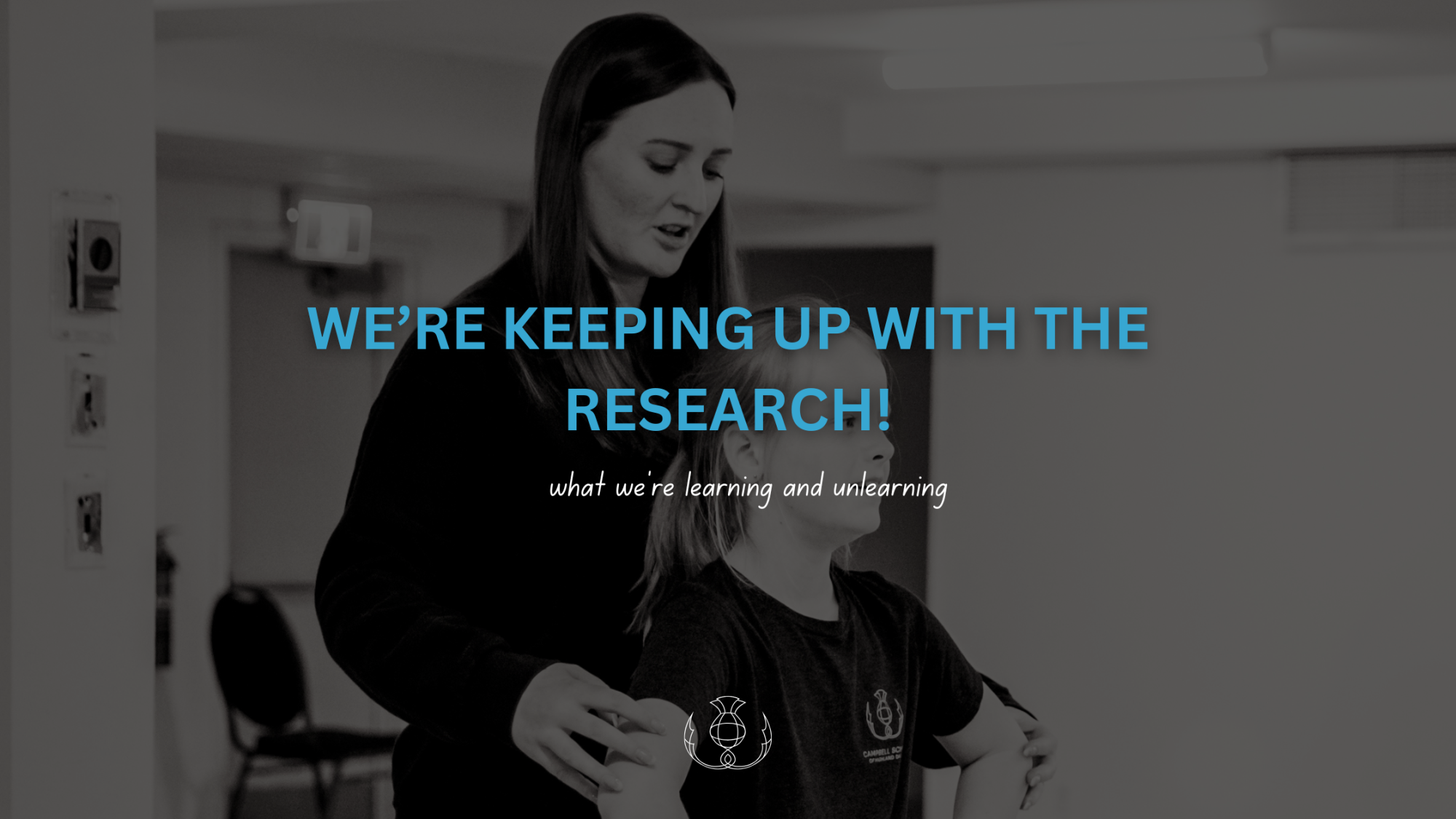
In the past few years, we’ve been learning and unlearning. We’ve been scouring the latest research to soak up any innovative, groundbreaking or refreshed idea that’s been studied in the last while, while also unlearning some of the pervasive but outdated practices we absorbed from our younger years. It has majorly changed the way we plan and teach. It’s not only interesting, it feels like it’s becoming more and more crucial for proper, progressive dance development.
Concepts like periodization, child and sports psychology or current trends in injury prevention are at the forefront, and have changed a LOT from when we were kids. We’ve always known that how a dancer feels in the studio stays with dancers long after they leave. We take it seriously that our actions and philosophies have an impact. It’s what pushes us to take the research more seriously than ever.
What we are learning is changing our language in class, at competitions and online. You’ll probably hear us talking about taper days, competition fuelling, executive function, or off-season, for example. This helps us focus on the people we’re coaching, their individual needs and making sure we’re empowering them with skills, ideals, values and philosophies that set them up for success, without damaging their progress or minds with outdated methods.
There Has Never Been a Healthier Time to Dance
The research related to coaching and dance development has come a long way in the last few years. Investigation into child development, sport psychology, physiology, injury prevention, and mental health is producing findings that speak directly to what we do in this studio. We’re so excited to be able to take that information and throw it right into how we’re teaching.
One of the ideas we’re most excited about is this: when the environment is right, sport can be a supercharger for youth; just as equally, if done wrong (and dare we say the ‘traditional’ way), it can cause long lasting damage and create a hatred of the sport.
Wrong environment: We’ve all seen it. The champion dancer who quits at 14, because they’re burnt out, injured, or bored. They say things like ‘dance just isn’t fun anymore’ or start to feel like their wins are what matters to their instructors, rather than them as a person. They may hear things in class like “Don’t show me garbage”, or “that wasn’t even worth watching”. They’re relegated to the back of the class. They’re constantly shown that unless they perform correctly, they don’t matter, and see other dancers as threats to their position on top.
Fear based teaching may produce results in the short term! Dancers often appear to be excelling and making great strides, but at the end of their dance career, many express emotional and/or physical damage and a long lasting distaste for the sport. The ones who do continue have to relearn what it means to love dancing and to ‘be’ a dancer without the pressure, fear and anger.
The list of positives that come out of engaging in physical activity in the right environment, where dancers feel empowered and safe, are huge: community, routine, physical challenge, goal-setting, resilience. Highland Dance can provide all of this, but only when the focus is on the whole dancer: their mental wellbeing, their well-rounded progression, their whole-body training help with realistic goals and their place within the community. Emotional manipulation, fear-based training, denigration and all-or-nothing goals, just for the sake of winning, just aren’t it anymore.
The Research Is About More Than Dance
Child psychology and development might be the area that’s most exciting right now, especially with our backgrounds in education. Research on how young brains process feedback, build motivation, and respond to challenges has changed a lot from what most of us grew up hearing. Making sure the feedback we provide builds a child’s inner voice rather than undermining has always been paramount at CSHD, and the new research backs us up.
Sport psychology gives us a much better understanding of what keeps young athletes dancing longterm. We want all our dancers to have a lifelong love of Highland, so it’s critical to facilitate that process. Pressure and perfectionism are silent joy-killers whereas autonomy, mastery, and belonging are the things that keep kids (and adults) coming back. It’s no wonder we have a huge group of 18+ dancers who still love and immerse themselves in dance!
Coaching practices are super interesting as we contemplate things like intrinsic motivation, building resilience, fostering a desire to improve and work on areas of weakness. Because it’s so important to us for CSHD dancers to look at hard work with a ‘woohoo, I can’t wait to practice half points for an hour’ mentality, it’s important that we spend time figuring out how best to nurture it.
Injury prevention and rehab was, and maybe still is, ignored for too long in the dance world, but we feel it’s absurd to look past this absolutely HUGE part of sport. Understanding how growing bodies respond to load, what rest actually does, and what “listening to your body” means are things we have implemented into our training and almost immediately saw results with. We want kids dancing for decades if they want to, and so knowing how to keep them healthy is a non-negotiable.
Why This Matters to Us
We take it seriously that what happens in this studio stays with dancers long after they leave. The way we talk to dancers has a good chance of becoming part of the way they talk to themselves, whether that’s good or bad. The habits we help them build around effort, setbacks, and their own bodies will go with them everywhere, and that’s a big thing to take on.
The research we’re seeing is telling us we’re on the right track. Coaches can contribute positively to a dancer’s well-being, and bolster them as people, or tear them down and cause damage. We would be heartbroken to learn that our actions have been detrimental to someone’s well-being or growth, so that’s why we take it so seriously and keep up with current research.
We also recognize that the kids in our studio right now are living in a genuinely different world than most of us grew up in. Social media, earlier competitive pressures and more complex social landscapes are all things that kids today have to deal with in a totally different way than generations before. We want to meet them where they actually are and help them in ways that actually do help.
What This Looks Like in Practice
We stay current, looking at major trends, and seeing what experts in the fields of sport, coaching, and psych are recommending. We also stay open to the idea of constant change. Because what works for one kid might not work for another, just like what worked today wouldn’t necessarily have a few years ago. Does this mean we’re not strong and secure in what we’re doing? Not at all, it just means being secure in our practices enough to know that changes can make them better. Staying adaptable to new ways of looking at our teaching practice is our norm now.
Sometimes it looks like taking courses, following experts on social media or reading papers, and other times it looks like getting the staff together to brainstorm teaching methods for a particular class or student. It all comes down to us wanting the best for each kid that comes through our studio doors.
The research keeps moving, and so do we, and our hope is that our dancers are getting the best they possibly can with the information that’s available today.